A tortilla rarely looks like the most important part of a dish. It’s slim, easy to fold, and usually disappears beneath the wrap filling. Even so, your choice of wrap can change the nutritional balance of the finished meal.
If you are looking at tortilla calories, a minimal energy value does not tell the whole story. The better question is how well a tortilla fits your dietary needs, preferred texture, and everyday recipes.
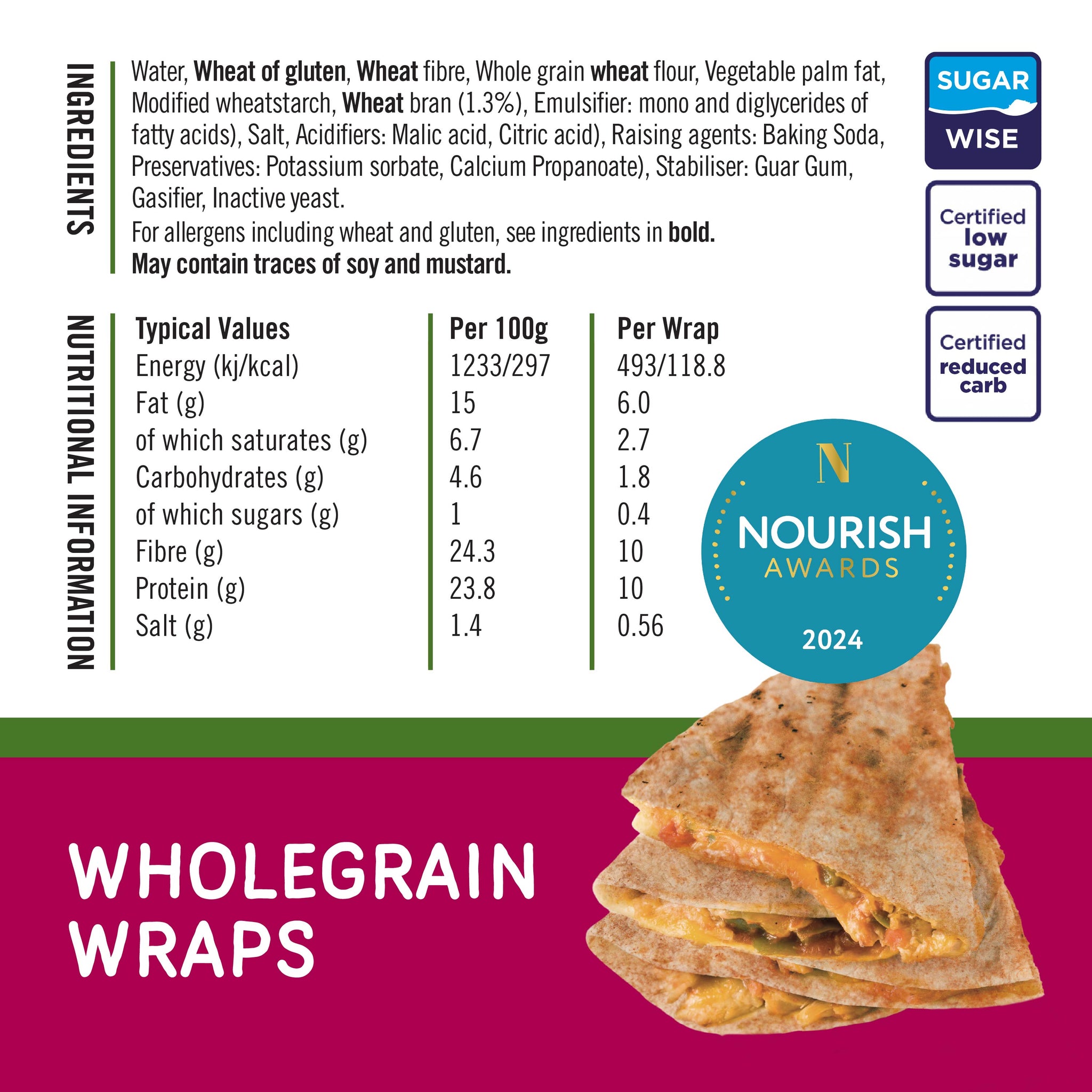
Image credit: fitbakes.co.uk
The Calorie Comparison Behind the Numbers
Search for “calories wrap tortilla” and you may find quite different values between products. To give an example, Mission’s Wholemeal Wrap contains approximately 186 calories per wrap, while its Carb Balance version contains around 125 calories. Both numbers are drawn from nutrition information published by the manufacturer.
This example makes a case for looking at the individual tortilla, instead of relying on general assumptions. A tortilla’s appearance does not reveal its calorie count: serving weight can differ substantially between products. A tortilla with fewer carbohydrates does not automatically have the fewest calories.
Changing the Wrap: What Changes Nutritionally
Think of a lunch made with grilled chicken, roasted peppers, salad leaves, and a little yoghurt dressing. Keep the ingredients inside but choose a lower-carbohydrate wrap in place of the conventional one. You still have essentially the same lunch, although its nutrient composition is different.
Fitbakes Wholegrain Wraps are formulated for this sort of meal flexibility. According to Fitbakes, each wrap contains 2g carbohydrates alongside 10g protein and 10g fibre.
These figures make the item relevant to people who are cutting back on carbs while still enjoying bread-based meals. The exact calorie content should be verified on the product’s full nutritional label.
Protein and Fibre Play Different Roles
Food labels often highlight protein and fibre side by side, although they contribute differently of nutrition. Protein is an important nutrient for normal tissue repair and maintenance. Fibre contributes to healthy digestion and can make it easier to a dish feel more satisfying. With Fitbakes reporting 10g of each per wrap, both are relevant to compare during a comparison of alternatives.
However, nutritional balance also depends on what else you eat. Compare a tortilla containing vegetables and an appropriate protein source with one covered in rich sauces: the nutritional profiles differ.
How You Prepare a flatbread wrap Affects the Final Meal
The way you cook a tortilla may change the meal’s calorie total even if you do not change the product. A dry pan adds no cooking oil when you toast a filled wrap; frying with oil, by contrast, introduces extra energy. The manufacturer recommends around 30 seconds of light toasting for its wholegrain wraps to bring out a deeper malty note.
For a quick meal, try warming the wrap before adding grilled mushrooms, spinach, and a little cheese. Another option is to turn the tortilla into a thin flatbread with roasted vegetables, tomato, and herbs. These serving ideas keep preparation simple while giving you different ways to use the same wrap.
Look Beyond the Wrap Itself
It’s easy to spend time comparing tortilla labels while overlooking the ingredients placed inside them.
The calorie count of a dish also reflects the spreads, cheese, dressings, and cooking fats you use. If you’re monitoring energy intake, consider the entire meal instead of treating the wrap itself as an isolated ingredient.
People eating fewer carbohydrates should also check the carbs in their fillings. Considering both the tortilla and its filling provides better context for your food choices.
Finding a Tortilla That Suits Your Priorities
A useful calories wrap tortilla should work with your favourite recipes, suit your nutritional priorities, and be enjoyable enough to use regularly. Fitbakes Wholegrain Wraps offer a plant-based, lower-carb option with protein and fibre figures reported by the manufacturer.
An informed choice starts with reviewing ingredients and allergens, serving size, and the entire nutrition panel. A single small figure on the packaging cannot establish the best tortilla for your needs. It’s the one that helps you prepare meals that suit your daily routine.
How to Build a Filling Wrap Without Overloading It
A tortilla rarely looks like the most important part of a dish. It’s slim, easy to fold, and usually disappears beneath the wrap filling. Even so, your choice of wrap can change the nutritional balance of the finished meal.
If you are looking at tortilla calories, a minimal energy value does not tell the whole story. The better question is how well a tortilla fits your dietary needs, preferred texture, and everyday recipes.
Image credit: fitbakes.co.uk
The Calorie Comparison Behind the Numbers
Search for “calories wrap tortilla” and you may find quite different values between products. To give an example, Mission’s Wholemeal Wrap contains approximately 186 calories per wrap, while its Carb Balance version contains around 125 calories. Both numbers are drawn from nutrition information published by the manufacturer.
This example makes a case for looking at the individual tortilla, instead of relying on general assumptions. A tortilla’s appearance does not reveal its calorie count: serving weight can differ substantially between products. A tortilla with fewer carbohydrates does not automatically have the fewest calories.
Changing the Wrap: What Changes Nutritionally
Think of a lunch made with grilled chicken, roasted peppers, salad leaves, and a little yoghurt dressing. Keep the ingredients inside but choose a lower-carbohydrate wrap in place of the conventional one. You still have essentially the same lunch, although its nutrient composition is different.
Fitbakes Wholegrain Wraps are formulated for this sort of meal flexibility. According to Fitbakes, each wrap contains 2g carbohydrates alongside 10g protein and 10g fibre.
These figures make the item relevant to people who are cutting back on carbs while still enjoying bread-based meals. The exact calorie content should be verified on the product’s full nutritional label.
Protein and Fibre Play Different Roles
Food labels often highlight protein and fibre side by side, although they contribute differently of nutrition. Protein is an important nutrient for normal tissue repair and maintenance. Fibre contributes to healthy digestion and can make it easier to a dish feel more satisfying. With Fitbakes reporting 10g of each per wrap, both are relevant to compare during a comparison of alternatives.
However, nutritional balance also depends on what else you eat. Compare a tortilla containing vegetables and an appropriate protein source with one covered in rich sauces: the nutritional profiles differ.
How You Prepare a flatbread wrap Affects the Final Meal
The way you cook a tortilla may change the meal’s calorie total even if you do not change the product. A dry pan adds no cooking oil when you toast a filled wrap; frying with oil, by contrast, introduces extra energy. The manufacturer recommends around 30 seconds of light toasting for its wholegrain wraps to bring out a deeper malty note.
For a quick meal, try warming the wrap before adding grilled mushrooms, spinach, and a little cheese. Another option is to turn the tortilla into a thin flatbread with roasted vegetables, tomato, and herbs. These serving ideas keep preparation simple while giving you different ways to use the same wrap.
Look Beyond the Wrap Itself
It’s easy to spend time comparing tortilla labels while overlooking the ingredients placed inside them.
The calorie count of a dish also reflects the spreads, cheese, dressings, and cooking fats you use. If you’re monitoring energy intake, consider the entire meal instead of treating the wrap itself as an isolated ingredient.
People eating fewer carbohydrates should also check the carbs in their fillings. Considering both the tortilla and its filling provides better context for your food choices.
Finding a Tortilla That Suits Your Priorities
A useful calories wrap tortilla should work with your favourite recipes, suit your nutritional priorities, and be enjoyable enough to use regularly. Fitbakes Wholegrain Wraps offer a plant-based, lower-carb option with protein and fibre figures reported by the manufacturer.
An informed choice starts with reviewing ingredients and allergens, serving size, and the entire nutrition panel. A single small figure on the packaging cannot establish the best tortilla for your needs. It’s the one that helps you prepare meals that suit your daily routine.
Featured News